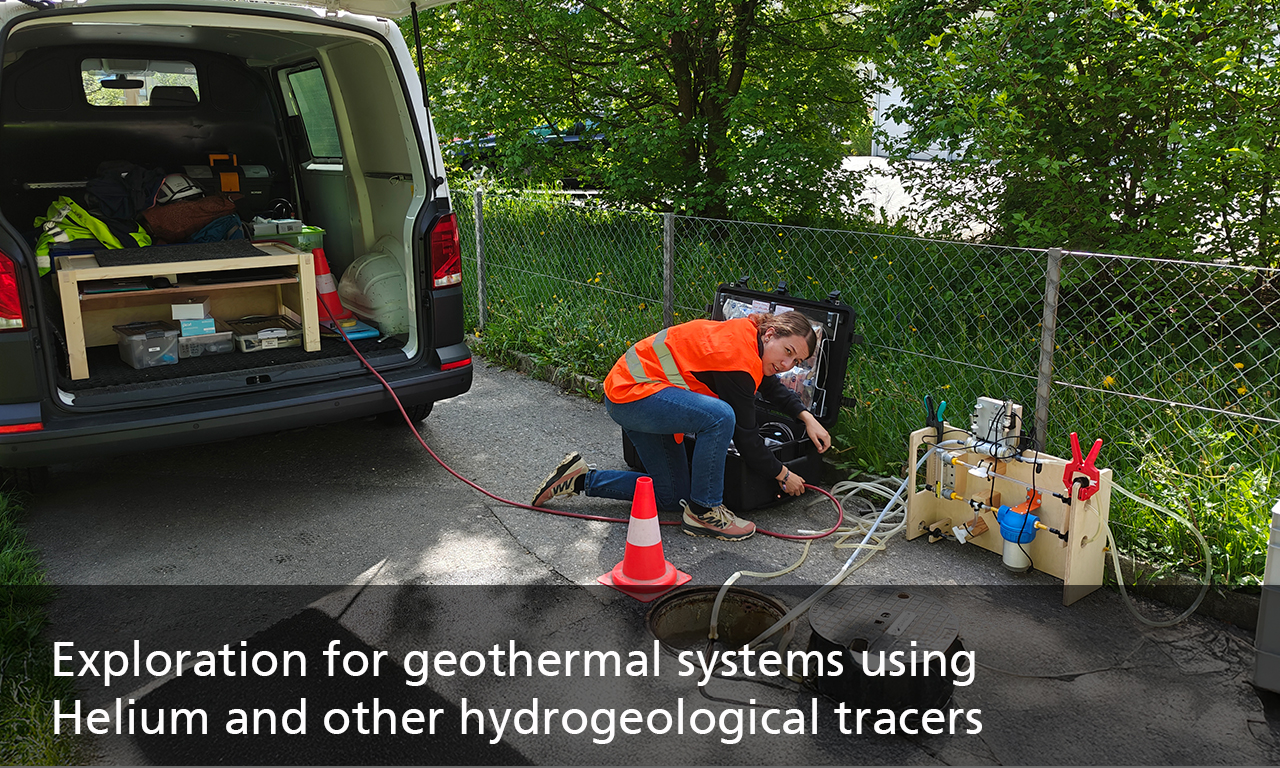
Orogenic geothermal systems result from the topography-driven, deep circulation of meteoric water through the crystalline basement including the fast upflow of the heated water along permeable fault zones (Diamond et al., 2018). Such orogenic systems are responsible for the 15 thermal water occurrences in and near the Rhône Valley discharging at temperatures up to 65°C. Due to the abundance of deep-reaching structures, it can be assumed that there are also an unknown number of blind geothermal systems, i.e. systems without surface manifestations (e.g. warm spring).
One approach to identify such blind systems is to identify areas where ions such as Na, K, Cl and SO4 are elevated compared to the geogenic background levels. Several such anomalies have been identified in the districts of Martigny, Sion and Sierre during the ongoing GeoTex Rhône project. However, all of these elements can also have anthropogenic sources (naturally occurring evaporites, contaminated sites, fertilisers etc.). In order to confirm the thermal nature of the anomalies, additional data on more specific thermal tracers (Si, Li and 4He) need to be collected and evaluated.
Once confirmed as blind geothermal systems caused by the upwelling of deep basement fluids, several aspects need to be investigated in the areas of interest:
- Structural setting (collaboration with tectonic research group)
- Make-up of the unconsolidated Quaternary infill of the Rhône Valley (based on existing data from shallow wells and some seismic profiles)
Together this will lead to the development of a detailed conceptual model of the blind geothermal system(s) present in the area investigated. This in turn will help to advance our understanding of orogenic geothermal systems present in inneralpine valleys and guide national as well as international exploration.
Advisors: Dr. Daniela Van den Heuvel, Dr. Daniel Rufer, PD Dr. Christoph Wanner
Specialities: ERG
University: BE