Project description: The discovery of slow earthquakes at active plate boundaries—seismic events that slip more slowly than typical earthquakes—has reshaped our understanding of how energy is dissipated along major tectonic plate boundaries. One way to increase our understanding of what controls these slow earthquakes is to study exhumed faults and shear zones that potentially formed under these conditions. Some studies have found that slow slip at low stresses is linked to very fine grain-scale deformation processes and fluid flow as well as variations in rock types. In this project, you will investigate the physical and chemical mechanisms governing slow slip earthquakes. This potentially contributes to our understanding of fault mechanics and earthquake hazards.
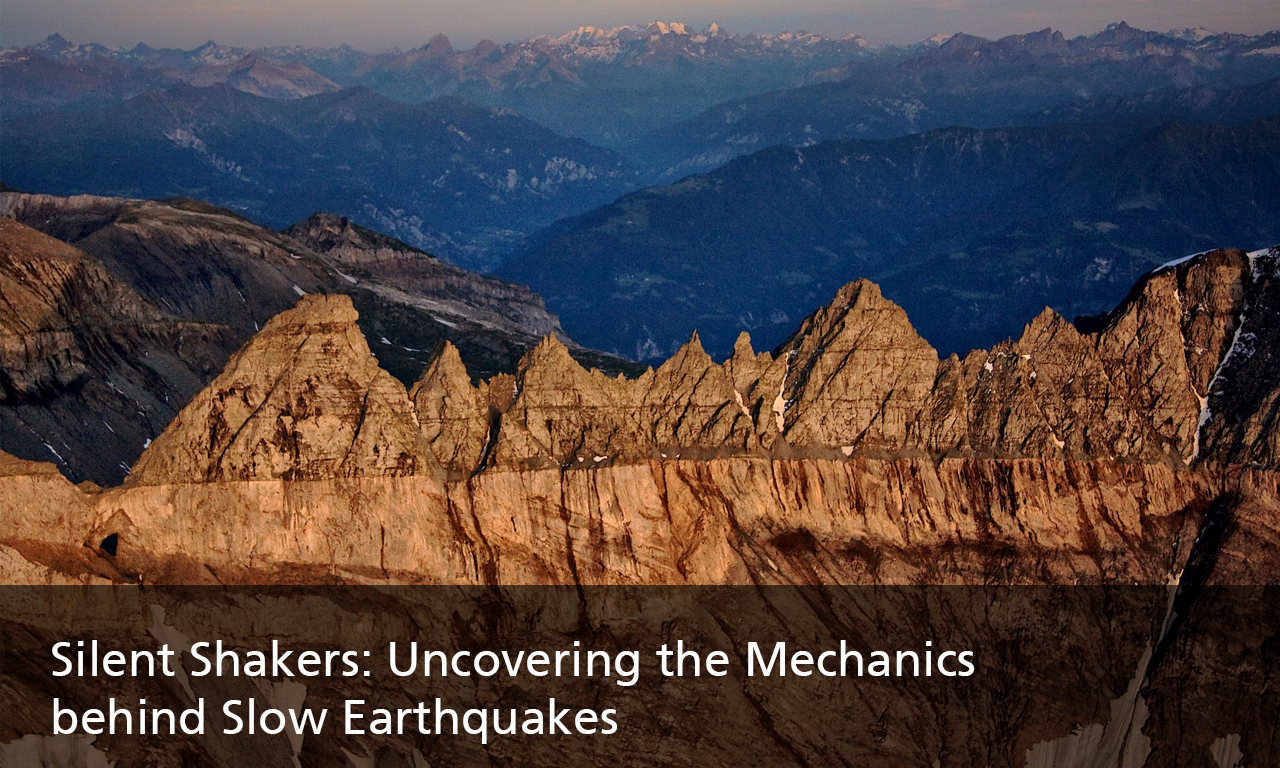
Project tasks: Together with a team of experts from UniBe and UNESCO, your goal is to study the famous natural carbonate mylonites at the Glarus Thrust in the UNESCO World Heritage Site Tectonic Arena Sardona. Thereby showing interplay between fast frictional events manifest by vein formation and slow viscous deformation including the overprint of the veins by dynamic recrystallization at the thrust contact. Owing to a retreating Vorab Glacier, there are worldclass textbook outcrops not having yet been investigated in detail. Through the use of modern unmanned aerial vehicle (UAV; drones), you will digitally map the structures on the freshly glacial polished rock surfaces. Samples will be collected to identify major microstructural domains and overprinting relationships using optical light microscopy, high-resolution SEM, cathodoluminescence microscopy and finally cutting-edge LA-ICP-MS will be applied to obtain the geochemical signature of these rocks. All data will be integrated by comparing the observations in the Alps with active seismic processes along present-day plate boundaries (e.g., Japan, New-Zealand).
Advisors: Prof. Ismay Vénice Akker, Prof. Marco Herwegh
Specialities: GEOL
University: FR
Proposal:
Silent Shakers: Uncovering the Mechanics Behind Slow Earthquakes